Electronic Laboratory Equipment Guide: Explore Instruments, Measurements, Testing & Applications
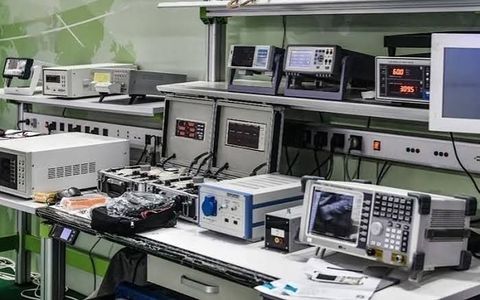
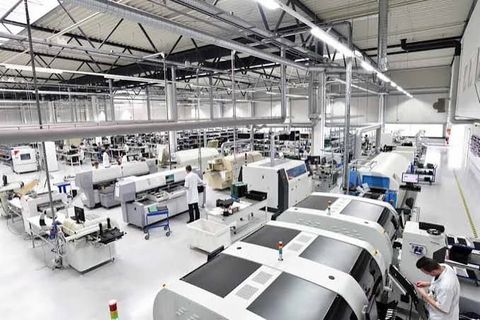
Electronic laboratory equipment is used to measure, test, analyze and develop electrical and electronic circuits. These instruments are important in educational laboratories, research facilities, product development environments, manufacturing laboratories and electronics testing facilities
Different instruments perform different measurement functions. A digital multimeter can measure voltage, current and resistance, while an oscilloscope helps visualize electrical signals over time. Signal generators create controlled electrical signals, and laboratory power supplies provide adjustable DC power for circuit testing.
Understanding the purpose and characteristics of common laboratory instruments helps users select suitable equipment for different measurement and testing requirements.
What Is Electronic Laboratory Equipment?
Electronic laboratory equipment refers to instruments and supporting devices used to examine electrical signals, circuits, components and electronic systems.
Common equipment includes:
Digital multimeters
Oscilloscopes
Function and signal generators
DC power supplies
LCR meters
Frequency counters
Electronic loads
Spectrum analyzers
Logic analyzers
Network analyzers
Soldering and rework equipment
The appropriate instrument depends on the measurement being performed and the characteristics of the circuit under examination.
Digital Multimeter
A digital multimeter, or DMM, is one of the most commonly used electronic measurement instruments.
Depending on the model, a multimeter can measure:
AC and DC voltage
AC and DC current
Resistance
Continuity
Diode characteristics
Capacitance
Frequency
Temperature
Some advanced instruments also provide additional functions such as data logging, automatic ranging and computer connectivity.
Common Applications
Digital multimeters are frequently used for:
Component testing
Circuit troubleshooting
Voltage verification
Continuity checks
Resistance measurements
Basic electrical maintenance
Oscilloscope
An oscilloscope displays electrical signals as waveforms, generally with voltage on the vertical axis and time on the horizontal axis.
It can help analyze:
Amplitude
Frequency
Period
Rise and fall times
Pulse width
Noise
Signal distortion
Timing relationships
Important Oscilloscope Specifications
When examining an oscilloscope, several specifications are particularly important:
Bandwidth: Indicates the frequency range over which the instrument can accurately display signals.
Sample rate: Indicates how frequently the instrument samples an input signal.
Record length: Determines how much sampled data can be captured.
Channel count: Indicates how many signals can be examined simultaneously.
Oscilloscopes are widely used in circuit development, embedded systems, communications and electronics education.
Function and Signal Generators
A function generator produces controlled electrical signals for circuit testing.
Common waveform types include:
Sine waves
Square waves
Triangle waves
Ramp waveforms
Pulse signals
Users can generally adjust parameters such as frequency, amplitude and offset.
Applications
Signal generators can be used to:
Test amplifier circuits
Examine filters
Generate clock or pulse signals
Evaluate circuit response
Test audio-frequency circuits
Provide controlled inputs during laboratory experiments
DC Laboratory Power Supply
A laboratory DC power supply provides controlled electrical power to electronic circuits.
Typical controls include:
Output voltage
Current limit
Output enable
Multiple output channels
Current limiting is particularly useful because it can help restrict the current delivered to a circuit during testing.
Common Applications
Laboratory power supplies are used for:
Prototype testing
Educational experiments
Embedded-system development
Circuit troubleshooting
Component testing
LCR Meter
An LCR meter is designed primarily to measure passive component characteristics.
The letters represent:
L: Inductance
C: Capacitance
R: Resistance
Depending on the instrument, additional characteristics such as impedance, phase angle and quality factor may also be measured.
LCR meters are useful when more detailed characterization of passive components is required than a basic multimeter can provide.
Frequency Counter
A frequency counter measures the frequency of an electrical signal.
It is commonly used when precise frequency measurement is required.
Applications can include:
Oscillator testing
Clock-signal verification
Signal-generator calibration checks
Communication-system testing
Electronic circuit development
Some instruments can also measure related parameters such as period and frequency stability.
Electronic Load
An electronic load provides a controlled electrical load for testing power sources and power-conversion equipment.
Unlike a simple fixed resistor, an electronic load can electronically control the amount of current drawn from the source.
Common operating modes may include:
Constant current
Constant voltage
Constant resistance
Constant power
Electronic loads are frequently used when evaluating power supplies, batteries, converters and other power-related equipment.
Spectrum Analyzer
A spectrum analyzer examines signals in the frequency domain.
Instead of primarily showing how voltage changes with time, it displays signal energy across a range of frequencies.
It can help identify:
Fundamental frequencies
Harmonics
Spurious signals
Interference
Noise
Frequency components
Spectrum analyzers are particularly relevant to radio-frequency, wireless communication and signal-analysis applications.
Logic Analyzer
A logic analyzer is designed to examine digital signals across multiple channels.
It can capture and display the logical states of digital signals over time.
Applications include:
Embedded-system debugging
Digital circuit analysis
Microcontroller development
Communication-bus analysis
Timing verification
Logic analyzers can be particularly useful when several digital signals need to be observed simultaneously.
Network Analyzer
A network analyzer is used to characterize the behavior of electronic networks, particularly at higher frequencies.
Depending on the type of instrument, measurements may include parameters related to:
Reflection
Transmission
Impedance
Frequency response
Signal loss
Vector network analyzers are widely associated with RF and microwave testing.
Soldering and Rework Equipment
Electronic laboratories also commonly require equipment for assembling or modifying circuits.
Typical tools include:
Soldering stations
Hot-air rework stations
Desoldering tools
Soldering irons
Fume extraction equipment
Inspection microscopes
These tools support circuit-board assembly, component replacement and prototype development.
Important Measurement Concepts
Selecting laboratory equipment requires understanding several basic measurement concepts.
Accuracy
Accuracy describes how close a measurement is to the actual or accepted value.
Precision
Precision describes the consistency of repeated measurements.
An instrument can produce highly consistent measurements without necessarily being highly accurate if there is a systematic measurement error.
Resolution
Resolution indicates the smallest change that an instrument can distinguish or display.
Measurement Range
Range defines the values that an instrument can measure within its specified operating conditions.
Bandwidth
Bandwidth is particularly important for instruments that measure time-varying or high-frequency signals. An instrument with insufficient bandwidth may not accurately represent a signal.
Electronic Laboratory Equipment Applications
Electronic laboratory instruments are used across many areas.
Education
Educational laboratories use multimeters, oscilloscopes, power supplies and signal generators to demonstrate fundamental electrical and electronic concepts.
Research and Development
Research environments may require advanced instruments for signal characterization, component evaluation and prototype development.
Embedded Systems
Oscilloscopes, logic analyzers and multimeters are commonly used during microcontroller and embedded-system development.
Communication Systems
Spectrum analyzers, signal generators and network analyzers can support RF and communication-system testing.
Power Electronics
Power supplies, electronic loads and oscilloscopes are frequently used to evaluate converters, batteries and power-management circuits.
Manufacturing and Quality Testing
Electronic measurement equipment can support production testing, troubleshooting and verification of electronic assemblies.
Choosing Electronic Laboratory Equipment
Several factors should be considered when selecting an instrument.
Measurement Requirement
First identify exactly what needs to be measured. A multimeter may be sufficient for DC voltage and resistance, while waveform analysis requires an oscilloscope.
Electrical Characteristics
Consider the expected voltage, current, frequency and signal type.
Accuracy and Resolution
Higher measurement requirements may require instruments with greater accuracy, resolution and stability.
Safety
Safety features such as input protection, isolation and appropriate measurement categories can be important depending on the application.
Connectivity
USB, Ethernet, LAN or other interfaces can be useful when measurements need to be recorded or controlled through software.
Calibration
Laboratory instruments may require periodic calibration or verification to maintain measurement confidence.
Measurement Safety
Electronic laboratory measurements should be performed according to the instrument manufacturer's instructions and applicable laboratory procedures.
Important practices include:
Use appropriate probes and cables.
Check measurement ranges before connecting equipment.
Avoid exceeding instrument input specifications.
Use suitable protective equipment where required.
Verify grounding and isolation requirements.
Keep test leads organized.
Inspect cables and probes for damage.
Follow laboratory electrical-safety procedures.
Extra care is required when working with high voltages, high currents, RF equipment or energy-storage systems.
Modern Trends in Electronic Laboratory Equipment
Laboratory instruments are increasingly incorporating digital connectivity and software-based analysis.
Important developments include:
Touchscreen interfaces
Automated measurements
Remote instrument control
Computer-based data acquisition
Cloud-connected laboratory workflows
Higher-speed sampling
Advanced waveform analysis
Automated test sequences
Integrated measurement software
Compact portable instruments
Modern instruments can combine several measurement functions and allow test results to be stored, analyzed and shared digitally.
Frequently Asked Questions
What is the most common electronic laboratory instrument?
A digital multimeter is one of the most commonly used instruments because it can perform several basic electrical measurements, including voltage, current and resistance.
What is an oscilloscope used for?
An oscilloscope is primarily used to observe and analyze electrical signals as waveforms over time.
What is the difference between a multimeter and an oscilloscope?
A multimeter generally provides numerical measurements, while an oscilloscope displays how an electrical signal changes over time and allows detailed waveform analysis.
What does an LCR meter measure?
An LCR meter primarily measures inductance, capacitance and resistance, along with additional parameters on some instruments.
Why is calibration important?
Calibration helps verify that an instrument's measurements remain within specified performance limits and supports reliable measurement practices.
Conclusion
Electronic laboratory equipment provides the measurement and testing capabilities required to understand, develop and evaluate electronic circuits. Basic instruments such as multimeters and power supplies are useful for routine measurements, while oscilloscopes, spectrum analyzers, network analyzers and logic analyzers support more specialized testing.
The appropriate equipment depends on the required measurement range, frequency, accuracy, resolution, safety requirements and application. As laboratories become increasingly digital, connected and automated, modern instruments are also providing more software integration, data analysis and automated testing capabilities.
Disclaimer: This article is provided for general informational and educational purposes only. Electronic measurement procedures, safety requirements, instrument specifications and testing practices can vary depending on the equipment and application. Always follow the manufacturer's documentation and applicable laboratory safety procedures when operating electronic test equipment.

Related Post...
API Software Guide: Explore Types, Features, Integration, Security & Key Concepts
Updated: September 23, 2026
Read More
SaaS Application Development Guide: Explore Architecture, Development, Features, Security & Scalability
Updated: September 22, 2026
Read More
Electronic Component Manufacturers Guide: Explore Types, Components, Manufacturing & Key Insights
Updated: September 24, 2026
Read More