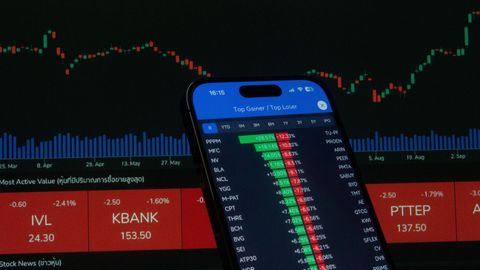
Buying and Selling Securities Guide: Explore Market Processes, Order Types, Trading & Risk Awareness
Buying and selling securities is a fundamental activity within modern financial markets. Securities can represent ownership in a company, a lending relationship, a claim on an underlying asset or another financial interest.
Market participants may purchase or sell securities for different reasons, including long-term investment objectives, portfolio management, income generation, risk management or shorter-term trading.
Understanding how securities markets work is important before participating in them. The process involves several interconnected elements, including market participants, exchanges or trading venues, brokers, order types, execution, clearing, settlement and regulatory requirements.
This guide explains the basic process of buying and selling securities, common order types, trading concepts, settlement, research considerations and important risk-awareness principles.
What Are Securities?
Securities are financial instruments that can represent an ownership interest, debt obligation or other financial claim.
Common categories include:
- Stocks
- Bonds
- Exchange-traded funds
- Mutual funds
- Government securities
- Corporate debt instruments
- Derivatives
- Other regulated financial instruments
The characteristics, risks and trading mechanisms of each security can differ.
What Does Buying a Security Mean?
Buying a security generally means acquiring an ownership interest, debt claim or contractual financial position.
For example, purchasing shares of a publicly traded company generally gives the investor an ownership interest represented by those shares.
Buying a bond generally involves lending money to the issuer in exchange for specified contractual terms.
The exact rights associated with a security depend on the instrument.
What Does Selling a Security Mean?
Selling a security generally involves transferring or closing an existing position in exchange for proceeds determined through the relevant market mechanism.
For a long position, a sale typically reduces or closes the investor's ownership position.
Selling prices depend on market conditions, available buyers and the type of order used.
How Securities Markets Work
A simplified securities transaction can be represented as:
Buyer → Broker/Trading Platform → Market → Seller
After execution, additional processes take place:
Execution → Clearing → Settlement → Ownership/Position Update
The exact structure varies by security and market.
Major Participants in Securities Markets
Investors
Investors purchase securities based on objectives such as long-term growth, income or portfolio diversification.
Traders
Traders may focus more heavily on short- or medium-term price movements.
Brokers
Brokers provide access to financial markets and facilitate transactions according to applicable rules.
Exchanges
Stock exchanges provide organized marketplaces for trading eligible securities.
Market Makers
Market makers may provide buy and sell quotations, contributing to market liquidity depending on the market structure.
Clearing Organizations
Clearing entities help manage obligations created by executed transactions.
Depositories and Custodians
These organizations can maintain records of securities ownership or positions.
Regulators
Financial regulators establish and enforce rules designed to support fair and orderly markets and investor protection.
Basic Securities Trading Process
The process of buying or selling a security generally involves several steps.
Step 1: Identify the Security
The investor or trader selects the security to research.
Step 2: Conduct Research
Research may include:
- Company information
- Financial statements
- Market conditions
- Valuation
- Industry trends
- Economic information
Step 3: Determine the Transaction
The participant decides whether to buy or sell and determines the desired quantity.
Step 4: Select an Order Type
The appropriate order type depends on the desired price and execution conditions.
Step 5: Submit the Order
The order is submitted through a broker or trading platform.
Step 6: Order Routing and Matching
The order may be routed to an exchange or another trading venue where it can potentially be matched.
Step 7: Execution
A transaction occurs when compatible buy and sell orders are matched.
Step 8: Clearing
The obligations of the transaction are processed through the relevant clearing infrastructure.
Step 9: Settlement
The security and associated funds are exchanged according to the market's settlement cycle.
What Is a Buy Order?
A buy order instructs a broker or trading platform to purchase a specified security under defined conditions.
A buy order can specify:
- Security
- Quantity
- Price condition
- Order duration
- Other applicable instructions
What Is a Sell Order?
A sell order instructs a broker or trading platform to sell a specified security.
It may specify:
- Security
- Quantity
- Price condition
- Order duration
- Other instructions
Common Order Types
Understanding order types is an important part of securities trading.
Market Order
A market order generally seeks execution at the best available price.
It prioritizes execution rather than guaranteeing a specific price.
The actual execution price can differ from the displayed market price, especially during periods of rapid movement or limited liquidity.
Limit Order
A limit order specifies a maximum price for a buy or a minimum price for a sell.
For example, a buyer can specify the highest price they are willing to pay.
A limit order may remain unexecuted if the market does not reach the required price.
Stop Order
A stop order becomes active when a specified trigger price is reached, subject to the rules of the relevant market.
Stop orders can be used as part of predefined trading or risk-management processes.
Stop-Limit Order
A stop-limit order combines a trigger condition with a limit price.
Once the stop condition is reached, the order becomes a limit order.
This provides greater price control but does not guarantee execution.
Day Order
A day order generally remains active during the applicable trading session and expires according to the relevant market rules if it is not executed.
Good-Till-Cancelled Order
A GTC order can remain active beyond a single trading session according to the rules of the broker and market.
Availability and duration vary.
Bid and Ask Prices
The bid price represents a price at which buyers are willing to purchase.
The ask price represents a price at which sellers are willing to sell.
The difference between the two is known as the bid-ask spread.
For example:
| Market Information | Example |
|---|---|
| Bid | ₹499 |
| Ask | ₹500 |
| Spread | ₹1 |
The actual values vary continuously with market conditions.
Bid-Ask Spread
The spread can be influenced by:
- Liquidity
- Trading volume
- Volatility
- Market conditions
- Security characteristics
Highly liquid securities often have narrower spreads, although this is not guaranteed.
Market Depth
Market depth refers to the available buy and sell orders at different price levels.
A deeper market may have larger quantities available around the current market price.
Market depth can change rapidly.
Liquidity
Liquidity describes how easily a security can generally be bought or sold without causing a substantial change in its market price.
Factors affecting liquidity can include:
- Trading volume
- Number of market participants
- Security characteristics
- Market conditions
Lower liquidity can increase execution uncertainty.
Trading Volume
Trading volume represents the quantity of securities traded during a specified period.
Volume is often studied alongside price movements.
High volume can indicate increased market activity, although it does not by itself determine whether a security will rise or fall.
Price Discovery
Price discovery is the process through which market participants' buy and sell orders contribute to determining market prices.
Information such as:
- Earnings
- Economic data
- Corporate announcements
- Interest rates
- Investor expectations
can influence supply, demand and price discovery.
Exchange Trading
Stock exchanges provide organized trading environments for eligible securities.
An exchange generally establishes:
- Trading rules
- Listing requirements
- Market mechanisms
- Order-handling procedures
- Transparency requirements
The exact structure differs across exchanges and jurisdictions.
Electronic Trading
Modern securities markets rely heavily on electronic systems.
Electronic trading can facilitate:
- Order submission
- Order matching
- Market-data distribution
- Trade confirmation
- Monitoring
Technology can process large numbers of transactions quickly.
Broker Trading Platforms
Broker platforms provide interfaces through which users can:
- Search securities
- View market data
- Submit orders
- Monitor positions
- Review transaction history
The features and pricing of platforms vary by provider and jurisdiction.
Trading Account and Investment Account
Different jurisdictions use different account structures.
An account may provide access to:
- Securities holdings
- Cash balances
- Trading functionality
- Transaction records
Some markets use separate structures for holding securities and executing transactions.
Users should understand the account requirements applicable to their jurisdiction.
Settlement
Settlement is the process through which the buyer receives the security and the seller receives the corresponding funds.
Settlement occurs after a trade has been executed.
The applicable settlement cycle varies by market and security.
Trade Date
The trade date is the date on which the transaction is executed.
Settlement Date
The settlement date is when the transaction is formally completed according to the applicable settlement process.
The difference between trade and settlement dates depends on the market.
Clearing
Clearing occurs between execution and settlement.
It helps establish the obligations of the parties involved in the transaction.
Clearing systems can help reduce counterparty and operational risks.
Custody of Securities
After settlement, securities may be held through a custodian or central securities depository system.
Electronic records have largely replaced physical certificates in many modern markets.
Buying and Selling Stocks
Stocks are among the most commonly traded securities.
A stock transaction typically involves:
Research → Order → Execution → Clearing → Settlement → Ownership Record
Stock prices can be influenced by:
- Company earnings
- Revenue
- Industry trends
- Interest rates
- Economic conditions
- Investor expectations
- Corporate announcements
Buying and Selling Bonds
Bond transactions differ from stock transactions because bonds represent debt rather than company ownership.
Important bond characteristics include:
- Face value
- Coupon
- Maturity
- Yield
- Credit quality
Bond prices can be affected by changes in interest rates and perceptions of issuer creditworthiness.
Buying and Selling ETFs
Exchange-traded funds combine features of pooled investment products with exchange trading.
An ETF can generally be bought and sold during market hours in a manner similar to other exchange-traded securities.
Factors to consider can include:
- Underlying assets
- Expense ratio
- Tracking difference
- Liquidity
- Bid-ask spread
Buying and Selling Government Securities
Government securities are debt instruments issued by governments.
Their characteristics depend on:
- Issuing government
- Maturity
- Interest structure
- Market conditions
Credit risk varies between issuers.
Buying and Selling Corporate Bonds
Corporate bonds represent debt issued by companies.
Investors may evaluate:
- Issuer financial strength
- Credit rating
- Coupon
- Maturity
- Yield
- Liquidity
Corporate bonds can involve greater credit risk than some government securities.
Long Positions
A long position generally means owning a security or having exposure that benefits from an increase in its price.
Example:
Buy → Hold → Sell Later
If the selling price is higher than the acquisition price, the position may generate a capital gain before considering applicable costs and taxes.
If the price falls, the position can result in a loss.
Short Selling
Short selling involves selling a security that the participant does not currently own, generally through a borrowing arrangement, with the intention of buying it back later.
A simplified sequence is:
Borrow → Sell → Buy Back → Return
If the repurchase price is lower, a profit may result before applicable costs.
If the price rises, losses can occur.
Short selling is subject to market-specific rules and can involve substantial risk.
Capital Gains and Losses
A capital gain generally occurs when an asset is sold for more than its relevant acquisition cost.
A capital loss can occur when an asset is sold for less.
The tax treatment depends on the applicable jurisdiction, security type and holding period.
Trading Costs
Buying and selling securities may involve various costs.
Potential costs include:
- Brokerage charges
- Bid-ask spreads
- Exchange charges
- Regulatory fees
- Taxes
- Financing costs
- Custody-related charges
The applicable costs depend on the market and intermediary.
Slippage
Slippage refers to the difference between an expected execution price and the actual execution price.
It can occur during:
- Rapid market movements
- Low-liquidity conditions
- Large transactions
- Market gaps
Securities Research
Research is an important part of informed securities transactions.
Potential research sources include:
Company Filings
Public companies may provide:
- Annual reports
- Financial statements
- Regulatory filings
- Corporate announcements
Stock Exchanges
Exchanges can provide:
- Market data
- Listing information
- Trading rules
- Corporate announcements
Financial Regulators
Regulatory authorities provide:
- Investor education
- Regulatory information
- Market rules
- Public disclosures
Government Sources
Government institutions can provide economic statistics and policy information.
Company Investor Relations
Companies often publish financial results and investor-related information.
Fundamental Analysis
Fundamental analysis evaluates factors related to the underlying economic or financial characteristics of a security.
For companies, researchers may study:
- Revenue
- Earnings
- Cash flow
- Debt
- Profit margins
- Competitive position
- Industry conditions
Technical Analysis
Technical analysis studies market data such as:
- Price
- Volume
- Trends
- Support and resistance
- Indicators
It is often used to study historical market behavior.
Historical patterns do not guarantee future outcomes.
Risk Awareness
Every securities transaction involves some degree of uncertainty.
Important risks include:
Market Risk
The market price may move against the position.
Liquidity Risk
A security may be difficult to sell at an expected price.
Volatility Risk
Rapid price movements can increase potential gains and losses.
Credit Risk
Debt securities can involve the risk that an issuer may not meet its obligations.
Interest-Rate Risk
Changes in interest rates can affect the prices of bonds and other securities.
Currency Risk
Foreign investments can be affected by changes in exchange rates.
Operational Risk
Technology failures, incorrect orders or processing issues can affect transactions.
Leverage Risk
Borrowed funds can increase both potential returns and potential losses.
Risk Management Principles
Risk management does not eliminate market risk. Instead, it focuses on managing exposure.
Position Sizing
Position sizing determines how much capital is allocated to a security.
Diversification
Diversification spreads exposure across multiple investments.
Risk Limits
Participants may establish limits on:
- Individual positions
- Sector exposure
- Leverage
- Portfolio losses
Liquidity Assessment
Liquidity should be considered before entering positions, particularly for less frequently traded securities.
Investment Horizon
The time period for which a security is expected to be held can influence the appropriate research and risk considerations.
Diversification
Diversification can involve spreading exposure across:
- Companies
- Sectors
- Asset classes
- Geographic markets
- Investment periods
Diversification can reduce concentration risk but cannot eliminate market losses.
Trading Psychology
Investor behavior can influence buying and selling decisions.
Common psychological challenges include:
- Fear
- Greed
- Overconfidence
- Impatience
- Confirmation bias
- Fear of missing out
A structured decision-making process can help reduce impulsive behavior.
Trading Plan
A trading plan can define:
- Securities to consider
- Research requirements
- Entry conditions
- Exit conditions
- Position sizing
- Risk limits
- Review process
A plan should reflect the individual's objectives and risk tolerance.
Paper Trading
Paper trading allows users to simulate securities transactions without using actual capital.
It can help learners practice:
- Order placement
- Position tracking
- Market analysis
- Risk management
- Trading-platform navigation
However, simulated trading does not reproduce every aspect of live-market participation.
Common Mistakes When Buying and Selling Securities
Trading Without Research
Purchasing securities without understanding the underlying asset can increase uncertainty.
Using Excessive Leverage
Leverage can magnify losses.
Ignoring Liquidity
A security may not always be easy to sell when desired.
Relying on a Single Indicator
No single market indicator can reliably predict future prices.
Chasing Price Movements
Entering a position solely because an asset has recently risen can create unfavorable risk-reward conditions.
Ignoring Transaction Costs
Frequent transactions can accumulate costs.
Emotional Decision-Making
Fear and excitement can influence decisions that are inconsistent with a predefined plan.
Buying and Selling Securities: Practical Checklist
Before submitting an order, consider:
- Security identified
- Investment or trading objective defined
- Relevant research completed
- Current market conditions reviewed
- Liquidity assessed
- Appropriate order type selected
- Quantity determined
- Potential costs reviewed
- Risk considered
- Portfolio concentration reviewed
- Applicable rules checked
- Transaction records maintained
Securities Trading Technology
Technology has transformed the way securities are traded.
Modern systems can provide:
- Real-time market data
- Electronic order execution
- Portfolio tracking
- Mobile access
- Automated alerts
- Research tools
- Charting systems
Advanced participants may also use algorithmic systems to automate predefined trading processes.
Algorithmic Trading
Algorithmic trading uses computer programs to execute trading rules.
An algorithm may respond to:
- Price levels
- Market conditions
- Time
- Volume
- Portfolio constraints
Algorithmic trading requires appropriate testing, monitoring and controls.
Artificial Intelligence and Securities Research
AI can assist with research tasks such as:
- Document summarization
- Data extraction
- Financial-document classification
- News analysis
- Pattern recognition
- Information organization
AI systems can produce inaccurate or incomplete outputs, so important financial information should be independently verified.
Regulatory Awareness
Securities markets operate under regulatory frameworks designed to support market integrity and investor protection.
Rules can address:
- Market conduct
- Disclosure
- Trading practices
- Broker activities
- Investor protection
- Settlement
- Recordkeeping
Requirements vary by jurisdiction and security type.
Buying and Selling Securities in India
In India, securities-market participants may interact with recognized exchanges, registered intermediaries and depository systems.
The regulatory environment includes institutions responsible for market oversight, investor protection and securities-market regulation.
Participants should consult current information from official sources such as the Securities and Exchange Board of India (SEBI), recognized stock exchanges and depositories for applicable rules and procedures.
Specific requirements can vary depending on the security, transaction type and investor category.
Future of Securities Trading
Securities markets continue to evolve through technology and changes in market infrastructure.
Important developments include:
Faster Electronic Settlement
Markets continue to improve settlement infrastructure and processing efficiency.
AI-Assisted Research
AI can help organize and analyze large volumes of financial information.
Algorithmic Execution
Automated execution technologies continue to influence market structure.
Mobile Market Access
Mobile platforms provide convenient access to market information and account functions.
Increased Market Data Availability
Investors can access more real-time and historical information than in previous generations of financial markets.
Frequently Asked Questions
What does buying a security mean?
Buying a security generally means acquiring an ownership interest, debt instrument or other financial position through an applicable market or transaction mechanism.
What does selling a security mean?
Selling a security generally involves transferring or closing an existing position in exchange for proceeds determined by market conditions and transaction terms.
What is a market order?
A market order generally seeks execution at the best available market price but does not guarantee a specific execution price.
What is a limit order?
A limit order specifies a price condition for execution. It provides greater price control but may not execute.
What is the bid-ask spread?
The bid-ask spread is the difference between the current bid and ask prices.
What is settlement?
Settlement is the process through which the buyer receives the security and the seller receives the corresponding funds after a transaction has been executed.
What is liquidity?
Liquidity refers to how easily a security can generally be bought or sold without substantially affecting its market price.
What is short selling?
Short selling generally involves selling a borrowed security with the intention of buying it back later. It can involve substantial risk and is subject to applicable rules.
What risks are associated with buying and selling securities?
Potential risks include market risk, liquidity risk, volatility, credit risk, interest-rate risk, currency risk, operational risk and leverage-related risk.
Can AI predict security prices?
AI can analyze large amounts of information and identify patterns, but it cannot guarantee future market movements or eliminate investment risk.
Is paper trading the same as real trading?
No. Paper trading is simulated and may not reproduce real-world execution, liquidity, transaction costs or emotional factors.
What should beginners learn before buying securities?
Beginners can start with market structure, asset classes, order types, liquidity, settlement, research methods and risk-management principles.
Conclusion
Buying and selling securities is supported by a complex financial-market infrastructure involving investors, brokers, trading venues, exchanges, clearing organizations, custodians and regulators. Understanding how these components work together provides a useful foundation for learning about securities markets.
The transaction itself may appear simple—submit an order, receive an execution and complete settlement—but numerous factors can affect the outcome. Order type, liquidity, bid-ask spreads, volatility, transaction costs and market conditions can all influence the trading experience.
Research is another important component. Fundamental analysis can help examine underlying financial and economic factors, while technical analysis can provide a framework for studying historical market behavior. Neither approach can guarantee future results.
Risk awareness should remain central to any securities activity. Market prices can move unexpectedly, liquidity can change, and leveraged or complex instruments can introduce additional risks. Diversification, appropriate position sizing, research and clearly defined objectives can help create a more structured approach to financial-market participation.
Ultimately, understanding market processes, order types, execution, settlement, research and risk can help individuals develop a more informed perspective on buying and selling securities.
Disclaimer: This article is intended for general educational and informational purposes only and does not constitute investment, financial, tax or legal advice. Securities markets involve risk, and investors may lose part or all of their invested capital. Market rules, settlement procedures, taxes, fees and regulatory requirements vary by jurisdiction and may change over time. Always refer to current information from relevant regulators, exchanges and registered financial intermediaries before making financial decisions.

Lavit
Our content is designed to attract, persuade, and convert your audience. We help brands grow through strategic, audience-first writing.
August 13, 2026 . 8 min read
Related Post...
Trading Fundamentals Guide: Explore Market Terminology, Trading Concepts, Risk Awareness & Learning Resource
By: Lavit
Updated: October 07, 2026
Read More
Buying and Selling Securities Guide: Explore Market Processes, Order Types, Trading & Risk Awareness
By: Lavit
Updated: August 13, 2026
Read More
Learn Trading Fundamentals: Discover Market Terminology, Risk Awareness & Helpful Resources
By: Lavit
Updated: July 13, 2026
Read More