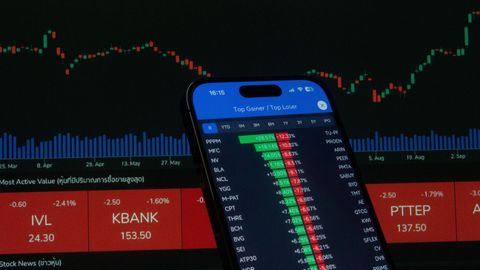
Investment Trading Guide: Explore Market Basics, Trading Concepts, Risk Awareness & Research Resources
Investment trading combines financial-market participation with the study of asset prices, market conditions, economic information and risk. People may participate in markets through different approaches, ranging from long-term investing to shorter-term trading.
Understanding the foundations of financial markets is important before exploring advanced strategies. Core areas include market terminology, asset classes, trading mechanisms, research methods, portfolio considerations and risk management.
Investment trading involves uncertainty. Prices can rise or fall because of economic conditions, company developments, investor sentiment, interest rates, geopolitical events and other factors. A structured understanding of these factors can help individuals interpret market information more effectively.
This guide provides an educational overview of investment trading, market basics, trading concepts, risk awareness and research resources.
What Is Investment Trading?
Investment trading refers broadly to the process of buying and selling financial assets while considering their potential value, market behavior and associated risks.
Depending on the market and jurisdiction, financial instruments may include:
- Stocks
- Exchange-traded funds
- Bonds
- Mutual funds
- Commodities
- Currencies
- Futures
- Options
- Other regulated financial instruments
Different instruments have different characteristics, risks, liquidity levels and regulatory requirements.
Trading and Investing
Trading and investing are often used interchangeably in casual discussions, but they can represent different approaches.
Investing
Investing generally emphasizes longer-term ownership and may focus on:
- Business fundamentals
- Earnings
- Valuation
- Economic growth
- Portfolio diversification
- Long-term objectives
Trading
Trading generally places greater emphasis on price movements and market timing.
Traders may study:
- Market trends
- Momentum
- Volatility
- Volume
- Technical indicators
- Market news
The distinction is not absolute. Some investors actively manage portfolios, while some traders hold positions for extended periods.
Understanding Financial Markets
Financial markets provide systems through which buyers and sellers exchange financial instruments.
Major market categories include:
- Equity markets
- Bond markets
- Commodity markets
- Foreign exchange markets
- Derivatives markets
Market infrastructure can include exchanges, brokers, clearing systems, custodians and other financial institutions.
Major Asset Classes
Equities
Equities represent ownership interests in companies.
Stock prices can be affected by:
- Corporate earnings
- Revenue growth
- Industry conditions
- Interest rates
- Economic conditions
- Investor expectations
Bonds
Bonds are debt instruments issued by governments, companies and other entities.
Important concepts include:
- Coupon
- Yield
- Maturity
- Credit quality
- Interest-rate sensitivity
Commodities
Commodities include physical resources and agricultural products such as:
- Gold
- Silver
- Crude oil
- Natural gas
- Agricultural commodities
Their prices can be influenced by supply, demand, inventories, weather and geopolitical developments.
Currencies
Foreign exchange involves the trading of currencies.
Currency values can be influenced by:
- Interest rates
- Inflation
- Economic growth
- Central-bank policy
- Trade flows
- Political developments
Derivatives
Derivatives derive their value from an underlying asset, index, rate or other reference.
Common examples include:
- Futures
- Options
- Swaps
Derivatives can be complex and may involve substantial risk.
Essential Investment Trading Terminology
Bid Price
The bid is the price buyers are currently willing to pay.
Ask Price
The ask is the price at which sellers are currently willing to sell.
Bid-Ask Spread
The spread represents the difference between the bid and ask prices.
Liquidity
Liquidity refers to how easily an asset can generally be bought or sold without causing a substantial price change.
Volatility
Volatility describes the magnitude and frequency of price fluctuations.
Trading Volume
Volume represents the quantity of an asset or contract traded during a particular period.
Market Capitalization
Market capitalization is commonly used to describe the market value of a publicly listed company based on its outstanding shares and share price.
Dividend
A dividend is a distribution that a company may make to shareholders, subject to the company's policies and applicable requirements.
Capital Gain
A capital gain generally refers to an increase in the value of an asset between acquisition and disposal.
Tax treatment depends on jurisdiction and individual circumstances.
Drawdown
Drawdown measures the decline from a previous peak in the value of a portfolio or trading account.
Types of Investment Trading
Long-Term Investing
Long-term approaches may involve holding investments for several years.
Research can focus on:
- Business quality
- Financial performance
- Industry trends
- Valuation
- Economic conditions
Position Trading
Position trading generally involves holding positions for longer periods while focusing on broader market movements.
Swing Trading
Swing trading generally attempts to capture price movements over several days or weeks.
Intraday Trading
Intraday trading involves opening and closing positions within the same trading session.
Scalping
Scalping involves very short-term trading with positions potentially lasting minutes or even seconds.
It can involve considerable execution and transaction-cost considerations.
Market Research
Research is an important part of informed market analysis.
Research can include:
- Company financial statements
- Economic reports
- Market data
- Industry research
- Corporate announcements
- Regulatory filings
- Central-bank publications
- Financial news
Using multiple reliable sources can provide broader context.
Fundamental Analysis
Fundamental analysis evaluates factors that may influence an asset's underlying value.
For companies, this can include:
- Revenue
- Earnings
- Profit margins
- Cash flow
- Debt
- Assets
- Competitive position
- Management
- Industry conditions
Financial Statements
Three commonly analyzed financial statements are:
Income Statement
Provides information about revenue, expenses and profit over a specific period.
Balance Sheet
Provides information about assets, liabilities and shareholders' equity.
Cash Flow Statement
Shows cash movements associated with operating, investing and financing activities.
Important Fundamental Metrics
Depending on the asset and analysis method, researchers may consider:
- Earnings per share
- Price-to-earnings ratio
- Price-to-book ratio
- Debt-to-equity ratio
- Operating margin
- Return on equity
- Free cash flow
- Dividend yield
No single metric provides a complete assessment of an investment.
Technical Analysis
Technical analysis studies historical price and market data to identify trends and patterns.
Common components include:
- Price charts
- Support and resistance
- Moving averages
- Momentum indicators
- Volume
- Chart patterns
Technical analysis cannot guarantee future price movements.
Price Trends
Markets may generally exhibit:
- Uptrends
- Downtrends
- Sideways movement
Trends can vary depending on the timeframe being studied.
Support and Resistance
Support represents an area where buying interest may have historically appeared.
Resistance represents an area where selling pressure may have historically appeared.
These levels are not guaranteed barriers and can change as market conditions evolve.
Moving Averages
Moving averages smooth historical price information.
Common types include:
- Simple Moving Average
- Exponential Moving Average
They may be used to study trend direction and price relationships.
Momentum Indicators
Momentum indicators attempt to measure the speed or strength of price movements.
Examples include:
- Relative Strength Index
- Moving Average Convergence Divergence
- Stochastic Oscillator
Indicators are generally best interpreted alongside broader market information rather than used as guaranteed signals.
Market Sentiment
Market sentiment describes the overall attitude of market participants.
Sentiment can be influenced by:
- Economic data
- Corporate news
- Political events
- Interest rates
- Market expectations
- Global developments
Sentiment can change quickly during periods of uncertainty.
Understanding Order Types
Market Order
A market order generally seeks execution at the best available price.
The actual execution price can differ from the displayed price, particularly in fast-moving or less-liquid markets.
Limit Order
A limit order specifies a price condition for execution.
The order may not execute if the market does not reach the specified price.
Stop Order
A stop order becomes active when a specified trigger price is reached, according to the rules of the relevant market.
Stop-Loss Approach
A stop-loss rule is commonly used to define a predetermined exit condition for an unfavorable position.
Execution may differ from the intended level during fast market movements.
Long and Short Positions
Long Position
A long position generally benefits when the price of the underlying asset rises.
Short Position
A short position generally seeks to benefit from a decline in price.
Short selling can involve additional requirements and potentially significant losses if prices rise sharply.
Leverage and Margin
Leverage allows a trader to control a position larger than the amount of capital directly committed.
Margin represents collateral required for certain leveraged transactions.
Leverage can magnify both potential gains and losses.
Understanding the mechanics of leverage is therefore an important part of risk awareness.
Investment Trading Risk
Financial markets involve several forms of risk.
Market Risk
Asset prices can move against a position.
Liquidity Risk
An asset may not always be easily bought or sold at an expected price.
Volatility Risk
Large price movements can create significant changes in portfolio value.
Leverage Risk
Leveraged positions can magnify losses.
Interest-Rate Risk
Changes in interest rates can affect bonds, equities, currencies and other assets.
Currency Risk
Foreign investments may be affected by exchange-rate movements.
Credit Risk
Some financial instruments involve the possibility that an issuer or counterparty may fail to meet obligations.
Operational Risk
Technology failures, connectivity problems or processing errors can affect trading activities.
Risk Management Fundamentals
Risk management focuses on controlling potential losses rather than eliminating market uncertainty.
Important concepts include:
Position Sizing
Position sizing determines the amount of capital allocated to a particular position.
Diversification
Diversification spreads exposure across different assets, sectors or geographical markets.
Risk Limits
Investors and traders may establish limits for:
- Individual positions
- Daily losses
- Portfolio exposure
- Leverage
Drawdown Monitoring
Monitoring drawdown can provide insight into the downside behavior of a portfolio or strategy.
Liquidity Assessment
Understanding market liquidity can help identify potential execution challenges.
Investment Portfolio Diversification
Diversification can involve spreading investments across:
- Asset classes
- Industries
- Companies
- Geographic regions
- Investment horizons
Diversification does not eliminate risk, but concentration risk may be reduced through appropriate diversification.
Asset Allocation
Asset allocation determines how capital is distributed among different asset categories.
For example, a portfolio may contain combinations of:
- Equities
- Bonds
- Cash equivalents
- Commodities
- Other assets
The appropriate allocation depends on individual objectives, risk tolerance, time horizon and applicable regulations.
Trading Psychology
Human behavior can influence financial decisions.
Common psychological challenges include:
- Fear
- Greed
- Overconfidence
- Impatience
- Confirmation bias
- Fear of missing out
- Revenge trading
A structured investment process can help reduce impulsive decisions.
Trading Plan
A trading plan establishes rules for evaluating and managing positions.
A plan can include:
- Market selection
- Trading timeframe
- Entry criteria
- Exit criteria
- Position sizing
- Risk limits
- Research requirements
- Review procedures
Investment Research Process
A structured research process can involve several stages.
Define the Objective
Determine the purpose and timeframe of the research.
Identify the Asset
Select the company, security, market or asset class being studied.
Collect Information
Use:
- Financial statements
- Regulatory filings
- Market data
- Economic information
- Industry research
Analyze
Evaluate the relevant financial and market factors.
Assess Risk
Consider potential downside scenarios and uncertainties.
Compare Alternatives
Compare the asset with relevant peers or alternative opportunities.
Review Regularly
Market conditions and company fundamentals can change over time.
Economic Factors Affecting Markets
Financial markets can respond to broader economic conditions.
Important factors include:
- Inflation
- Interest rates
- GDP growth
- Employment
- Consumer spending
- Industrial production
- Government policy
Inflation
Inflation represents the general increase in prices over time.
Changes in inflation expectations can influence interest rates, bonds, currencies and equities.
Interest Rates
Interest rates influence borrowing costs and can affect investment valuations and economic activity.
Economic Growth
Changes in economic growth can influence corporate earnings, employment and investor expectations.
Central Banks
Central banks influence financial conditions through monetary policy.
Important areas include:
- Policy rates
- Liquidity
- Inflation objectives
- Monetary-policy guidance
Geopolitical Events
International conflicts, trade policies, elections and diplomatic developments can influence markets.
The impact varies across assets and regions.
Investment Trading Technology
Technology plays a major role in modern financial markets.
Common tools include:
- Trading platforms
- Market-data systems
- Charting software
- Portfolio-management systems
- Mobile applications
- Research platforms
- Financial news systems
Algorithmic Trading
Algorithmic trading uses computer programs to execute predefined trading logic.
Algorithms may use:
- Price data
- Time conditions
- Statistical relationships
- Market indicators
- Portfolio constraints
Automated systems require appropriate testing, monitoring and risk controls.
Artificial Intelligence in Trading Research
AI technologies can assist with research tasks such as:
- Data classification
- Document analysis
- Pattern identification
- Text summarization
- Information extraction
- Sentiment analysis
AI-generated outputs should be independently evaluated because automated systems can produce errors or misleading interpretations.
Investment Trading Research Resources
Reliable research can come from multiple sources.
Company Filings
Public companies publish financial and regulatory information that can help investors understand their operations.
Stock Exchanges
Exchanges provide information about listed securities, market rules and trading mechanisms.
Financial Regulators
Regulatory organizations publish rules, investor education material and market information.
Central Banks
Central-bank publications can provide information about:
- Interest rates
- Inflation
- Monetary policy
- Economic conditions
Government Statistics
Official economic statistics can provide data related to:
- Employment
- Inflation
- GDP
- Trade
- Industrial production
Company Investor Relations
Companies may publish:
- Annual reports
- Financial results
- Investor presentations
- Corporate announcements
Financial Research Publications
Academic research, economic reports and industry studies can provide additional context.
Evaluating Investment Information
Not every market resource provides reliable information.
When evaluating research, consider:
- Source credibility
- Publication date
- Data quality
- Methodology
- Conflicts of interest
- Supporting evidence
- Regulatory status
Be cautious with claims involving guaranteed returns, risk-free trading or unrealistic performance expectations.
Paper Trading and Simulation
Paper trading involves simulating transactions without using actual capital.
It can help learners practice:
- Order placement
- Position tracking
- Risk calculations
- Chart analysis
- Trading platforms
However, simulated environments may not reproduce all aspects of live trading, including emotional pressure and real-world execution conditions.
Investment Trading Journal
A journal can record:
- Asset
- Date
- Entry
- Exit
- Position size
- Research rationale
- Risk level
- Result
- Market conditions
- Lessons learned
Reviewing this information can help identify recurring patterns in decision-making.
Common Investment Trading Mistakes
Investing Without Research
Making decisions without reviewing relevant information can increase uncertainty.
Excessive Concentration
Allocating too much capital to a single asset or sector can increase portfolio risk.
Excessive Leverage
Leverage can magnify losses as well as gains.
Emotional Decisions
Fear and excitement can lead to decisions that do not follow a predefined strategy.
Chasing Market Movements
Entering an asset solely because its price has recently increased can expose participants to unfavorable conditions.
Ignoring Costs
Trading and investment costs can include:
- Brokerage charges
- Spreads
- Exchange fees
- Taxes
- Financing costs
- Slippage
The applicable costs vary by market and jurisdiction.
Ignoring Time Horizon
An investment strategy should be considered in relation to the intended holding period and financial objectives.
Investment Trading Learning Path
A structured learning pathway can help beginners build knowledge gradually.
Stage 1: Financial Market Basics
Learn:
- Asset classes
- Exchanges
- Market participants
- Bid and ask
- Liquidity
- Volatility
Stage 2: Trading Mechanics
Study:
- Order types
- Long and short positions
- Settlement
- Margin
- Leverage
Stage 3: Fundamental Research
Learn:
- Financial statements
- Company analysis
- Valuation
- Industry analysis
Stage 4: Technical Analysis
Explore:
- Charts
- Trends
- Support and resistance
- Volume
- Indicators
Stage 5: Risk Management
Study:
- Position sizing
- Diversification
- Drawdown
- Exposure limits
Stage 6: Practical Simulation
Use paper trading or simulated environments to understand market mechanics.
Stage 7: Continuous Research
Follow official market information, economic developments and relevant company disclosures.
Investment Trading Checklist
Before evaluating an investment or trade, consider:
- Asset identified
- Investment objective defined
- Time horizon established
- Relevant research collected
- Fundamental factors reviewed
- Market conditions considered
- Liquidity assessed
- Potential risks identified
- Position size considered
- Diversification reviewed
- Trading costs considered
- Regulatory requirements checked
- Research sources verified
- Investment thesis documented
Investment Trading vs Speculation
Investment research generally involves analyzing available information and considering long-term objectives and risks.
Speculation generally involves accepting substantial uncertainty in anticipation of a particular price movement.
The distinction can vary depending on the asset and strategy, but understanding the difference can help individuals assess the nature of their decisions.
Investment Trading and Taxes
Tax treatment varies by:
- Country
- Asset type
- Holding period
- Transaction type
- Investor classification
- Income category
Tax regulations can change, so current official guidance should be consulted.
Regulatory Awareness
Financial-market activities are regulated differently across jurisdictions.
Before participating in a financial market, individuals should understand:
- Applicable regulations
- Broker or intermediary requirements
- Investor protections
- Product restrictions
- Fees
- Risk disclosures
- Tax obligations
In India, market participants can refer to the relevant regulatory authorities and recognized exchanges for current information.
Future Trends in Investment Trading
Technology and market structure continue to evolve.
Important trends include:
AI-Assisted Research
AI can process large amounts of documents and market information.
Automated Workflows
Technology can automate repetitive research and portfolio-management tasks.
Real-Time Analytics
Faster data processing can provide more immediate market information.
Mobile Trading
Mobile applications have expanded access to market information and trading tools.
Alternative Data
Some research processes increasingly incorporate nontraditional datasets alongside conventional financial information.
Digital Assets
Digital assets have created additional markets and financial instruments, although they involve unique technological, regulatory and market risks.
Frequently Asked Questions
What is investment trading?
Investment trading involves participating in financial markets by buying and selling financial instruments while considering price movements, research, objectives and risk.
What should beginners learn first?
Beginners can start with financial-market terminology, asset classes, order types, liquidity, volatility and basic risk-management concepts.
What is the difference between trading and investing?
Trading generally focuses more on shorter-term price movements, while investing often emphasizes longer-term ownership and fundamental value.
What are the main investment assets?
Common asset classes include equities, bonds, commodities, currencies, funds and derivatives.
What is fundamental analysis?
Fundamental analysis evaluates financial, economic and business factors that may influence an asset's underlying value.
What is technical analysis?
Technical analysis studies price and market data to identify trends, patterns and potential market behavior.
What is portfolio diversification?
Diversification involves spreading investments across different assets, sectors, regions or other categories to reduce concentration risk.
What is leverage?
Leverage allows market participants to control a larger position relative to the capital directly committed. It can magnify both gains and losses.
What is a trading journal?
A trading journal records investment or trading decisions, research, positions, outcomes and observations for later review.
What is paper trading?
Paper trading is simulated trading that allows users to practice market transactions without using actual capital.
Can AI be used for investment research?
AI can assist with information extraction, document analysis, classification and summarization. However, AI outputs can contain errors and should be independently evaluated.
Is investment trading risky?
Yes. Financial markets involve market, liquidity, volatility, credit, leverage, operational and other risks. Losses can occur.
Can trading profits be guaranteed?
No. Market performance cannot be guaranteed, and past performance does not establish future results.
Conclusion
Investment trading requires an understanding of financial markets, asset classes, market terminology, research methods and risk management. While trading and investing can involve different time horizons and approaches, both require careful consideration of uncertainty and potential losses.
Fundamental analysis can help evaluate companies and economic conditions, while technical analysis can provide a framework for studying price and volume behavior. Portfolio diversification, position sizing and exposure management can help address different forms of investment risk.
Modern technology has also changed how investors and traders research markets. Trading platforms, real-time market data, automated systems and AI-powered research tools can make information more accessible, but technology does not remove financial risk.
A strong learning process begins with market fundamentals, progresses into research and analysis, and incorporates risk awareness, simulation and continuous evaluation. Reliable information from regulators, exchanges, companies, government institutions and established research sources can provide a stronger foundation than unverified market claims.
Investment trading should therefore be approached as an area requiring research, discipline, risk awareness and continuous learning, rather than as a guaranteed way to generate financial returns.
Disclaimer: This article is provided for general educational and informational purposes only and does not constitute investment, financial, tax or legal advice. Financial markets involve risk, and participants may lose some or all of the capital committed. Leverage and derivatives may involve additional or amplified risks. Regulations, taxation, products and market conditions vary by jurisdiction and may change over time. Readers should consult current official information and qualified professionals before making financial decisions.

Lavit
Our content is designed to attract, persuade, and convert your audience. We help brands grow through strategic, audience-first writing.
August 13, 2026 . 8 min read
Related Post...
Trading Fundamentals Guide: Explore Market Terminology, Trading Concepts, Risk Awareness & Learning Resources
By: Lavit
Updated: August 12, 2026
Read More
Personal Loan Explained: Guide to Basics, Interest Rates, Rules, and Expert Insights
By: Lavit
Updated: January 07, 2026
Read More
Learn Trading Fundamentals: Discover Market Terminology, Risk Awareness & Helpful Resources
By: Lavit
Updated: July 13, 2026
Read More