Black Water and Alkaline Water Guide: Explore Types, Differences, Properties & Potential Health Benefits
Water is available in many forms, including filtered water, mineral water, alkaline water, electrolyte beverages, and newer functional-water products. Among these, alkaline water and black water have attracted considerable attention because of their unusual mineral composition, higher pH, and, in the case of black water, distinctive dark appearance.
Alkaline water generally has a pH above 7 and may contain naturally occurring or added minerals such as calcium and magnesium. Black water is typically a type of dark-colored alkaline or mineral water associated with fulvic or humic substances. The exact formulation can vary significantly between products.
Both categories are often discussed in connection with hydration and wellness. However, some health claims surrounding these waters are stronger than the available scientific evidence. A recent 2026 review concluded that evidence for broad health benefits from alkaline water remains limited, with some potentially relevant effects being context-specific and requiring further research.
What Is Alkaline Water?
Alkaline water is drinking water with a pH greater than 7. The pH scale ranges from 0 to 14, with 7 considered neutral.
Water marketed as alkaline may obtain its higher pH through:
- Naturally occurring minerals
- Added calcium or magnesium
- Bicarbonate-rich mineral composition
- Mineral filtration
- Electrolysis
- Other water-treatment processes
The exact pH and mineral profile depend on the source and production method.
It is important to distinguish the pH of water from the body's overall acid-base balance. Human blood pH is tightly regulated by the lungs, kidneys, and chemical buffering systems. Drinking alkaline water does not simply make the entire body alkaline.
Mayo Clinic notes that, for most people, alkaline water has not been shown to be better than ordinary water for general health.
What Is Black Water?
Black water is a term commonly used for dark-colored drinking water containing fulvic acid or fulvic/humic mineral substances, although formulations vary.
The dark appearance is generally associated with these added substances rather than with ordinary water itself. Some products are also alkaline and contain various minerals.
Black water may therefore be described using terms such as:
- Black alkaline water
- Fulvic water
- Fulvic mineral water
- Mineral-infused black water
- Dark-colored functional water
However, these terms do not necessarily describe identical formulations.
The composition should therefore be checked on the individual product label rather than assuming that every black water product contains the same ingredients.
Why Is Black Water Black?
The most distinctive characteristic of black water is its color.
Fulvic and related humic substances can produce dark brown or black coloration when incorporated into water. Some commercial products describe their color as resulting from mineral or fulvic ingredients rather than artificial dyes.
This is different from ordinary drinking water, which is generally clear or nearly clear.
The color itself, however, does not demonstrate a particular health benefit.
Main Types of Alkaline Water
Alkaline water can be broadly categorized according to how its mineral and pH characteristics are produced.
Naturally Alkaline Mineral Water
Some groundwater naturally becomes alkaline after interacting with rocks and minerals.
The resulting water may contain minerals such as:
- Calcium
- Magnesium
- Bicarbonate
- Potassium
Its mineral composition depends on the geological source.
Mineral-Enhanced Alkaline Water
Some drinking waters have minerals added during processing to modify their mineral profile or pH.
The resulting composition depends on the ingredients and processing method.
Electrolyzed Alkaline Water
Electrolysis can alter the properties of water by passing an electrical current through it.
Some systems produce alkaline water and may also produce water with dissolved hydrogen.
The properties of electrolyzed water depend on the specific technology and operating conditions.
Black Alkaline Water
Black alkaline water combines an alkaline water profile with ingredients that create a dark appearance, commonly fulvic or humic substances.
Because formulations differ, black alkaline water should not be treated as a standardized category.
Black Water vs Alkaline Water
Although the terms are sometimes used together, they describe different characteristics.
| Feature | Alkaline Water | Black Water |
|---|---|---|
| Appearance | Usually clear | Usually dark or black |
| pH | Generally above 7 | Often alkaline, depending on formulation |
| Mineral content | May contain minerals | May contain minerals and fulvic/humic substances |
| Color source | Usually no dark coloration | Commonly associated with fulvic or humic substances |
| Composition | Varies by product | Varies considerably by product |
| Main interest | pH and mineral composition | Color, mineral composition and fulvic content |
| Scientific evidence | Limited for broad health claims | Limited for broad health claims |
The most important difference is that alkaline water describes a pH characteristic, while black water generally describes a product category based on its appearance and added ingredients.
pH and What It Means
pH measures how acidic or alkaline an aqueous solution is.
The general scale is:
- Below 7: Acidic
- 7: Neutral
- Above 7: Alkaline
Many commercially marketed alkaline waters have pH values somewhere above 7, but the exact value varies.
A higher pH does not automatically mean greater nutritional or health value.
Very high-pH water can also raise safety considerations. Mayo Clinic specifically notes concerns associated with highly alkaline water, particularly at pH levels above approximately 9.8, including the possibility of elevated blood potassium in susceptible individuals.
Minerals Found in Alkaline and Black Water
Depending on the source and formulation, these waters may contain minerals such as:
- Calcium
- Magnesium
- Potassium
- Sodium
- Bicarbonate
Black water products may additionally contain fulvic or humic substances.
Mineral content can vary significantly between products, so the label or laboratory analysis is more informative than the general product category.
What Is Fulvic Acid?
Fulvic acid is a complex group of organic substances associated with the decomposition of plant and other organic material.
It belongs to a broader group known as humic substances.
Fulvic substances have attracted interest because of their chemical properties and their ability to interact with minerals and other compounds.
However, the existence of these properties does not establish that drinking fulvic-containing water produces major health improvements.
Research specifically examining fulvic acid consumed through black water remains limited.
Potential Health Benefits of Alkaline Water
Alkaline water is often discussed in relation to hydration, digestion, bone health, metabolism, and acid-base balance.
The available evidence should be interpreted carefully.
Hydration
Water is essential for maintaining normal hydration.
Some studies have investigated whether mineral-rich alkaline water produces different hydration outcomes compared with ordinary water. Results have not consistently demonstrated a clinically meaningful advantage.
A systematic review of studies involving healthy populations found no clear additional health effects of alkaline water compared with mineral water.
This means that ordinary drinking water remains an important and effective source of hydration for most people.
Acid-Base Balance
One frequently repeated claim is that alkaline water can neutralize excess acidity throughout the body.
Human physiology is more complicated.
Blood pH is tightly controlled by respiratory and renal systems. Drinking a beverage does not simply change the body's overall pH.
Some studies have observed changes in urinary or other acid-base measurements after consuming mineral-rich alkaline water, but these findings should not be interpreted as evidence that alkaline water can generally "alkalize" the body or prevent disease.
Digestive Effects
Alkaline water has been investigated in relation to digestive conditions, particularly reflux-related mechanisms.
A recent 2026 review found that some of the more consistent evidence relates to gastrointestinal effects, including possible effects on pepsin activity and reflux-related symptoms. However, the authors emphasized that the overall clinical utility remains limited and further research is required.
This should not be interpreted as evidence that alkaline water is a treatment for digestive disease.
Bone-Related Research
Some research has explored whether mineral-rich alkaline water may influence markers associated with bone metabolism.
However, it remains unclear whether the effects come from the water's alkalinity itself or from minerals such as calcium.
Mayo Clinic notes that more research is needed to determine whether alkaline water provides meaningful long-term benefits for bone health.
Metabolic Health
Alkaline and hydrogen-rich waters have been investigated in small human studies involving metabolic markers.
Some studies have reported changes in selected measures, but the overall evidence is inconsistent.
The 2026 review found that evidence supporting broad metabolic, antioxidant, and immune benefits remains inconsistent and is often based on small or preclinical studies.
Potential Health Benefits of Black Water
Black water is frequently discussed as a source of minerals and fulvic substances.
However, it is important to distinguish potential biological properties from proven health outcomes.
Mineral Intake
If a black water product contains meaningful amounts of minerals, those minerals may contribute to overall dietary mineral intake.
The actual contribution depends on the mineral concentration and the amount consumed.
Antioxidant Research
Fulvic substances have been investigated for antioxidant-related properties in laboratory and experimental settings.
However, laboratory activity does not automatically establish a clinically meaningful benefit from drinking black water.
There is currently insufficient evidence to conclude that black water provides major antioxidant protection in humans.
Hydration
Black water is still primarily a water-based beverage.
If it contributes to a person's total fluid intake, it can contribute to hydration. There is not strong evidence that its dark color or fulvic content makes hydration inherently superior to ordinary water.
Nutrient Absorption Claims
Fulvic acid is sometimes promoted for its ability to improve mineral or nutrient absorption.
Although mechanisms involving mineral interactions have been studied, strong clinical evidence demonstrating significant health benefits from consuming fulvic-containing black water remains limited.
Claims That Require Caution
Several claims associated with alkaline and black water go beyond the available evidence.
These may include claims that such water:
- Detoxifies the entire body
- Prevents cancer
- Reverses aging
- Dramatically increases energy
- Treats chronic disease
- Significantly boosts immunity
- Permanently changes body pH
- Provides major metabolic improvements
A systematic review investigating alkaline water and cancer found no randomized trials demonstrating that alkaline water prevents or treats cancer.
Similarly, the recent 2026 review found that claims involving systemic alkalinization, immune enhancement, anti-aging, and disease prevention are not supported by robust clinical evidence.
Safety Considerations
Safety depends on the composition, manufacturing process, quality controls, and pH of the specific product.
Potential considerations include:
Very High pH
Extremely alkaline water may not be appropriate for everyone.
Mayo Clinic highlights particular concerns for people with kidney disease and notes potential issues associated with highly alkaline water.
Mineral Concentration
Some products may contain relatively high concentrations of minerals or electrolytes.
People with specific medical conditions or dietary restrictions should consider the composition rather than assuming that all mineral waters are equivalent.
Product Quality
The quality of the water and added ingredients is important.
Consumers should pay attention to:
- Ingredient information
- Mineral composition
- pH information
- Manufacturing details
- Regulatory labeling
- Packaging integrity
- Appropriate storage
Fulvic-Containing Products
Fulvic substances require particular attention to sourcing and quality control because naturally derived mineral or organic substances can vary in composition.
An FDA safety alert provides an important example: in 2021, the agency warned consumers against certain fulvic-acid products after finding elevated levels of lead and arsenic. This was a specific product safety incident and does not mean that all fulvic-containing products are contaminated, but it illustrates why source quality and testing matter.
Black Water and Food-Safety Regulation in India
The regulatory classification of a beverage matters.
In May 2026, Indian food-safety authorities took action involving a packaged alkaline-water product after testing found black particles, sediments, and fulvic acid. The reported issue involved classification, labeling, and requirements applicable to packaged drinking water.
This development is useful context because a product marketed as "water" may have different regulatory requirements from a beverage or functional product containing added ingredients.
Consumers should therefore look at the actual labeling and applicable regulatory category rather than assuming that every dark-colored water product is simply conventional drinking water.
Alkaline Water and Regular Water
For most healthy people, ordinary water remains a straightforward source of hydration.
| Factor | Regular Water | Alkaline Water |
|---|---|---|
| pH | Usually around neutral, depending on source | Above 7 |
| Hydration | Yes | Yes |
| Minerals | Depends on source | May contain added or naturally occurring minerals |
| Special health benefits | No special claims required | Evidence for broad additional benefits is limited |
| Color | Usually clear | Usually clear |
| Research | Extensive | Increasing but still limited for many claims |
The choice between them does not need to be framed as a competition. Hydration, water quality, mineral composition, and individual dietary requirements are generally more important considerations than the label "alkaline."
Black Water and Regular Water
| Factor | Regular Water | Black Water |
|---|---|---|
| Color | Clear | Dark |
| Fulvic substances | Generally absent | Often present |
| Mineral content | Depends on source | Depends on formulation |
| pH | Varies | Often alkaline |
| Hydration | Yes | Yes |
| Evidence for special benefits | Not applicable | Limited |
| Product composition | Usually simpler | Can contain additional ingredients |
Black water is therefore better understood as a specialized water-based beverage rather than a fundamentally different form of water.
Who Should Be More Cautious?
People with certain medical or dietary circumstances may need additional consideration before regularly consuming highly alkaline or mineral-rich water.
This can include people with:
- Kidney disease
- Conditions affecting electrolyte balance
- Certain medication regimens
- Mineral-restricted diets
The recent 2026 review also recommends caution in vulnerable groups, including people with chronic kidney disease, children, pregnant women, and people taking acid-suppressive medication.
This does not mean that these groups should automatically avoid every alkaline or mineral water product. Rather, the specific composition and individual circumstances matter.
How to Read a Water Label
When comparing different products, look beyond terms such as "alkaline," "mineral-rich," or "black."
Useful information includes:
pH
Check the stated pH and understand that a higher number does not automatically mean greater health value.
Mineral Composition
Look for quantities of:
- Calcium
- Magnesium
- Sodium
- Potassium
- Bicarbonate
Added Ingredients
Check whether the product contains:
- Fulvic substances
- Humic substances
- Electrolytes
- Vitamins
- Other functional ingredients
Regulatory Information
Look for appropriate labeling and information relevant to the product's regulatory category.
Storage Information
Follow the manufacturer's storage instructions, particularly after opening.
How the Two Categories Compare
The simplest way to understand the distinction is:
Alkaline water = primarily a pH and mineral characteristic.
Black water = primarily a dark-colored water category often associated with fulvic or humic substances, frequently combined with an alkaline formulation.
Some black waters are alkaline, but not every alkaline water is black.
Current Research Perspective
Research into alkaline water continues to develop.
A 2022 systematic review found that available evidence did not establish additional health effects of alkaline water compared with mineral water in healthy populations.
A newer 2026 review provides a more detailed assessment and concludes that some context-specific effects may exist, particularly around gastrointestinal outcomes, but broad claims regarding metabolic, immune, antioxidant, anti-aging, and disease-prevention effects remain inadequately supported.
This distinction is important because a substance can have a measurable biological effect without producing a clinically important health outcome.
Frequently Asked Questions
What is black water?
Black water is a dark-colored water-based beverage commonly associated with fulvic or humic substances and, in many formulations, an alkaline mineral profile.
Why is black water black?
Its dark appearance is generally associated with fulvic or related humic substances added to the water.
Is black water the same as alkaline water?
Not exactly. Alkaline water refers primarily to water with a pH above 7, while black water describes a category of dark-colored water commonly containing fulvic or mineral ingredients.
Is alkaline water better than regular water?
For most people, current evidence does not establish that alkaline water is generally better than ordinary water.
Does alkaline water change blood pH?
The body tightly regulates blood pH through its respiratory, renal, and buffering systems. Drinking alkaline water should not be interpreted as a way to substantially change normal blood pH.
Does black water contain minerals?
Many black-water products contain minerals or mineral-related ingredients, but the exact composition varies between products.
Does black water contain fulvic acid?
Many products marketed as black water use fulvic or fulvic/humic substances to create their dark appearance, but formulations differ.
Does alkaline water provide health benefits?
Some studies suggest possible context-specific effects, but broad claims about disease prevention, immune enhancement, or systemic alkalization are not strongly supported by current evidence.
Can everyone drink highly alkaline water?
Not necessarily. People with kidney disease, electrolyte-related conditions, or certain medical circumstances may need additional consideration.
Is black water a treatment for any disease?
Black water should not be considered a treatment for disease. Evidence for therapeutic claims remains limited.
What is more important than water color?
Water quality, appropriate hydration, mineral composition, product safety, and applicable food-safety standards are generally more important than color.
Conclusion
Black water and alkaline water represent two increasingly visible categories within the broader market for specialized drinking water.
Alkaline water is primarily defined by its higher pH and may contain naturally occurring or added minerals. Black water is generally associated with a dark appearance created by fulvic or humic substances and may also have an alkaline mineral profile.
Both types can provide water and therefore contribute to normal fluid intake. However, the presence of minerals, a higher pH, or a dark color does not automatically establish additional health benefits.
Current research suggests that some specific effects of alkaline water may warrant further investigation, particularly in gastrointestinal contexts, but evidence for broad claims involving detoxification, immunity, anti-aging, metabolic enhancement, or disease prevention remains insufficient.
For consumers, the most useful approach is to evaluate the actual composition of a product, including its pH, mineral content, added ingredients, labeling, quality controls, and applicable regulatory category.
Disclaimer: This article is intended for general educational and informational purposes only. It does not diagnose, prevent, or treat any medical condition and does not recommend any particular water product. Health effects can vary according to individual circumstances, water composition, and underlying conditions. People with medical conditions or specific dietary restrictions should consult an appropriately qualified healthcare professional before making significant changes to their regular dietary intake.

Related Post...

Black Water and Alkaline Water Guide: Explore Types, Differences, Properties & Potential Health Benefit
Updated: September 17, 2026
Read More
Dental Chair Guide: Explore Types, Components, Features, Functions & Key Considerations
Updated: September 13, 2026
Read More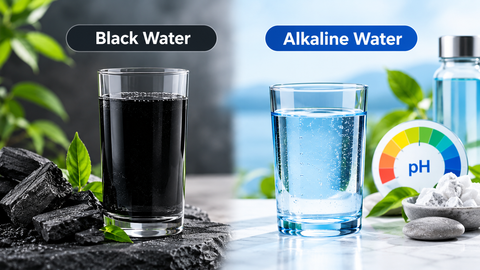
Black Water and Alkaline Water Guide: Explore Types, Differences, Properties & Potential Health Benefits
Updated: September 08, 2026
Read More